

How to Choose Plastic Healds for Automatic Drawing Machines
Choosing plastic healds for an automatic drawing machine requires more than matching the length of an old part. The heald’s profile, thickness, yarn opening and end design must also suit the machine. A mismatch can cause feeding problems or interrupt the drawing process.
Automatic drawing-in prepares warp yarns for weaving by passing them through the required loom components. Plastic healds used in this process must work with both the drawing machine and the loom frame where they will be installed.
For textile units in Ahmedabad, Gujarat and across India, a clear selection process helps reduce ordering errors. This guide explains which details to check, how to assess samples and what information to share with your supplier.
What Makes a Plastic Heald Suitable for Automatic Drawing
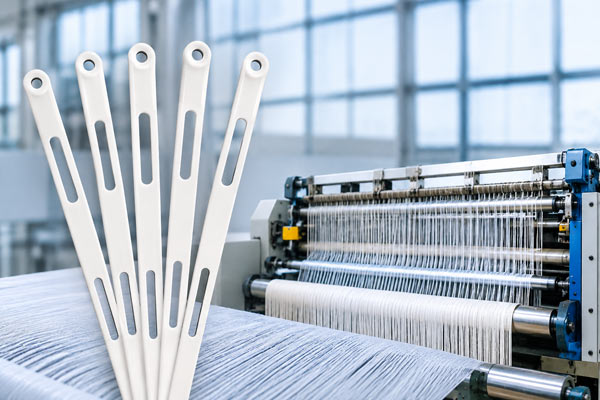
A suitable plastic heald must match the drawing machine’s handling system and the weaving setup. Its dimensions and shape should allow the machine to separate, position and draw yarn through the heald correctly.
A heald that fits a loom frame may still require a compatibility check for automatic drawing. Confirm suitability for the exact machine model and configuration before ordering.
The main selection points are:
- Drawing machine make and model
- Heald type and end profile
- Overall length and thickness
- Yarn opening size and position
- Loom frame requirements
- Yarn specifications and warp arrangement
Start With the Automatic Drawing Machine Model
operates several drawing machines, prepare a separate specification for each setup.
Share the existing heald part number when available. An approved drawing or unused reference sample can also help the supplier identify the required design.
Avoid relying only on statements such as “suitable for automatic drawing.” Ask whether the specific heald is compatible with your machine and its current setup.
Match the Plastic Heald Type and End Design
Plastic healds come in different profiles, including straight, C type and J type designs. These shapes should be selected according to the machine and frame requirements.
Compare the complete component with your approved reference. Check both ends, the central yarn opening and any profile features used during handling.
A.K. Industries lists plastic heald options for automatic and manual drawing, including a straight type for automatic drawing. Its page also shows C type and J type designs. Confirm which option suits your equipment rather than assuming every listed design works with every drawing machine.
Check Plastic Heald Dimensions Carefully
Length is an important starting point, but it does not confirm compatibility by itself. Two healds of equal length can differ in thickness, end shape or yarn opening position.
| Selection Detail | What to Check |
|---|---|
| Overall length | Match with the drawing setup and loom frame |
| Thickness | Suitability for machine handling and the specified arrangement |
| End profile | Correct engagement with the supporting components |
| Yarn opening size | Suitability for the intended yarn |
| Yarn opening position | Match with the approved design |
| Straightness | Absence of bends or twisting that could affect handling |
A.K. Industries lists 260 mm, 280 mm and 330 mm options for its straight automatic drawing type. Confirm the full specification and availability for your required design before placing an order.
How Does Warp Density Affect Plastic Heald Selection
Warp density describes how closely warp yarns are arranged across a fabric width. The number and distribution of healds across the frames also influence the space available for movement.
Plastic heald thickness should therefore be checked against the intended weaving arrangement and machine requirements. Choosing a thinner heald without checking its suitability can create a different set of handling or operating problems.
Provide the supplier with:
- Fabric construction
- Warp density
- Number of heald frames
- Heald distribution across the frames
Use the machine maker’s guidance and an approved specification when deciding on thickness.
Match the Yarn Opening to Your Yarn
The yarn opening, or eyelet, needs to suit the yarn passing through it. Check its size, shape, position and surface condition.
When discussing selection, share the yarn material and count or denier. Mention any special yarn features, such as texture, elasticity or surface treatment.
Inspect sample eyelets for rough edges, moulding defects or visible damage. The opening should also be compatible with the drawing process. An opening that appears suitable during manual threading may still need checking on the automatic machine.
Inspect Plastic Heald Quality Before a Trial
Consistent dimensions help a drawing machine handle repeated components. Before testing a new supply, compare several samples instead of inspecting only one.
Look for:
- Uniform length and thickness
- Consistent eyelet position
- Cleanly formed end profiles
- Flat, straight bodies
- Cracks, distortion or damaged edges
- Unwanted material around the yarn opening
Ask the supplier about the material specification and recommended handling conditions. Product colour alone should not be used to identify material grade or compatibility.
Test Samples Before Ordering in Bulk
A controlled sample trial is useful when changing suppliers, heald designs or specifications. Have trained staff carry out the trial according to the machine manufacturer’s procedures.
Observe whether the machine separates and feeds the healds correctly. Check for repeated stops, misfeeds, damaged parts or difficulty drawing the intended yarn.
After drawing, confirm that the healds fit the loom frame and work correctly in the weaving setup. Record the results so your purchasing team can use the approved specification for repeat orders.
Common Plastic Heald Selection Mistakes
Many ordering problems begin with incomplete information. Avoid these common mistakes:
- Selecting a heald by length alone
- Ordering from a photograph without dimensions
- Assuming manual drawing suitability confirms automatic drawing compatibility
- Ignoring the yarn opening and end profile
- Using a damaged sample without identifying the damage
- Changing thickness without reviewing the full setup
- Placing a bulk order before checking a new design
Keep an approved sample and drawing for each application. Label them clearly with the relevant machine and loom details.
Plastic Heald Selection Support in Ahmedabad Gujarat
A.K. Industries offers plastic heald wires from Ahmedabad, Gujarat, with listed designs for automatic and manual drawing applications.
For an accurate enquiry, provide your drawing machine model, loom frame details, heald profile, dimensions, yarn specifications and required quantity. Include an approved sample or drawing where possible. Confirm the proposed specification before ordering, especially when replacing an existing component with a different design.
Frequently Asked Questions
No. The heald must match the machine’s handling requirements, dimensions and profile. Confirm compatibility with the exact machine model and setup.
No. Thickness, end design, yarn opening size and eyelet position must also be checked. Equal length does not mean two healds are interchangeable.
Choose the length specified for your drawing machine and loom frame arrangement. Use an approved drawing, part number or reference sample to confirm it.
Check whether the existing healds are suitable for the automatic machine. Their suitability for manual drawing alone does not establish compatibility.
Send the machine make and model, loom frame details, heald type, complete dimensions, yarn details and quantity. Add a sample or drawing to make the requirement clearer.
A sample trial is advisable when introducing a new design or supplier. It helps check machine feeding, yarn drawing and loom fit before committing to a larger quantity.