

What Should You Check Before Buying Drop Wires?
Choose drop wires that match your loom’s warp stop motion system, approved part dimensions, and yarn requirements. Start by checking whether the loom needs mechanical or electrical drop wires. Then confirm the open or closed design, length, width, thickness, weight, and eyelet shape.
A small loom part can have a big effect on daily production. A drop wire that does not fit correctly may interfere with yarn movement or the stop motion system. Buying a replacement based only on its appearance can lead to fitting problems.
This guide explains what to check before placing an order. It also includes a simple buying checklist to help weaving mills, loom operators, and purchase teams share the right details with their supplier.
What Are Drop Wires in a Weaving Loom?
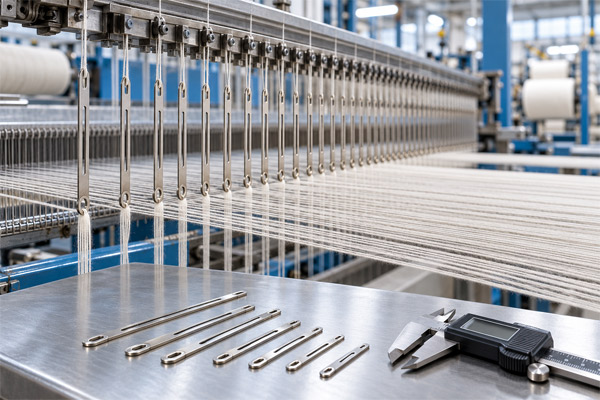
A drop wire is a metal component through which a warp yarn passes. When the yarn breaks, the drop wire falls and activates the loom’s warp stop motion system. Drop wires are also commonly called drop pins or droppers. The exact design depends on the loom and its stop motion arrangement. Carbon Steel Drop Pins Suppliers
Drop wires help the operator identify a broken warp yarn so it can be repaired before weaving continues.
When choosing replacements, the main question is simple: Will this drop wire fit and work correctly in this loom?
Identify the Warp Stop Motion System
The first step is to check whether your weaving loom uses a mechanical or electrical warp stop motion system.
Do not assume that two drop wires are interchangeable because their length and width look similar. Their working features may differ.
Check these details before ordering:
- Loom manufacturer and model
- Warp stop motion type
- Existing drop wire part number
- Manufacturer’s drawing or spare parts manual
- A working sample from the loom
If the part number is missing, send the supplier a sample and the loom details. A clear photograph can support identification, but a sample or dimensioned drawing gives more useful information.
Confirm the Open or Closed Design
Drop wires are available in open and closed designs for mechanical and electrical warp stop motion systems. Eagle Drop Wires lists these combinations using the following codes. Carbon Steel Drop Pins Suppliers
| Code | Drop Wire Type |
|---|---|
| MO | Mechanical open |
| MC | Mechanical closed |
| EO | Electrical open |
| EC | Electrical closed |
Use the design specified for your loom and threading arrangement.
Before changing from an open design to a closed design, or the other way around, ask your loom technician to confirm compatibility. A different design should be treated as a proposed change that needs checking.
Match the Drop Wire Dimensions
Length, width, and thickness must match the approved replacement specification. A drop wire that is slightly different may fit into the assembly but still move or sit incorrectly.
Measure a working sample and compare it with the loom manual where available.
| Selection Point | What to Confirm | Why It Matters |
|---|---|---|
| Length | Overall length in millimetres | Helps confirm fit within the stop motion assembly |
| Width | Width of the drop wire body | Helps check clearance and spacing |
| Thickness | Metal thickness | Affects fit and the weight of the part |
| Eyelet | Shape, size, and position | Must suit the yarn path and approved design |
| Slot or opening | Dimensions and position | Must match the stop motion arrangement |
| Weight | Weight per piece | Should match the approved loom and yarn setup |
Eagle Drop Wires publishes a product range of 80–268 mm in length, 7–15 mm in width, and 0.2–1.00 mm in thickness. These are overall catalogue ranges; buyers should confirm the required combination for their loom. Carbon Steel Drop Pins Suppliers
Buying tip: Do not use a bent, badly worn, or damaged drop wire as your only reference. Compare several working pieces or use an approved drawing.
Check the Yarn Requirements and Drop Wire Weight
Do not choose drop wire weight by guessing that heavier means better.
Share the following yarn and production details with your supplier or loom technician:
- Yarn material, such as cotton, polyester, or a blend
- Yarn count or linear density
- Warp tension
- Loom operating speed
- Fabric construction
- Current drop wire dimensions and weight
These details help the supplier check the proposed replacement against your existing setup.
If you plan to change the drop wire weight or dimensions, test samples before placing a bulk order. Keep the trial conditions recorded so you can compare the new part with the approved part.
What Details Should You Send to a Drop Wire Supplier?
A complete enquiry helps the supplier check compatibility and prepare a useful quotation.
| Order Detail | Information to Provide |
|---|---|
| Loom identification | Manufacturer and exact model |
| Stop motion system | Mechanical or electrical |
| Drop wire design | Open or closed |
| Dimensions | Length, width, and thickness in mm |
| Weight | Weight per piece, if known |
| Eyelet and slot | Drawing or sample reference |
| Material | Required grade |
| Finish | Required coating or surface finish |
| Yarn details | Material and yarn count |
| Quantity | Trial quantity and bulk requirement |
| Reference | Part number, drawing, or approved sample |
| Delivery | Required location and delivery schedule |
Avoid ordering only by product name. A specification sheet and approved sample give the purchase team a clearer reference.
Common Mistakes When Choosing Drop Wires
Buying Only on Price
Compare quotations for the same specification. Check material, dimensions, finish, sample approval, and delivery terms before deciding.
Matching Only the Length
Two drop wires can have the same length but different eyelets, thicknesses, weights, or openings. Check the complete part.
Assuming One Type Fits Every Loom
Confirm each loom model’s requirements separately. Similar machines may use different stop motion arrangements.
Approving a Bulk Order Without a Trial
A sample check can reveal fitting or operating problems before you receive the full quantity.
Blaming Every Warp Break on the Drop Wire
Warp breaks and unexplained loom stops can have several causes. Check yarn condition, threading, tension, cleanliness, and the stop motion setup with your technician.
Need Help Selecting Drop Wires for Your Loom?
A.K. Industries, through Eagle Drop Wires, lists drop wires for mechanical and electrical warp stop motion systems, with open and closed designs. Carbon Steel Drop Pins Suppliers
To discuss a replacement, share your loom model, drop wire type, dimensions, material, and required quantity. Include a sample or drawing so the team can check the proposed match.
Frequently Asked Questions
Start with the loom’s approved specification. Match the stop motion type, open or closed design, dimensions, eyelet, weight, and material. If the specification is unavailable, ask the supplier to assess a working sample alongside your loom details.
Yes. Drop wire, drop pin, and dropper are commonly used names for this component. The name does not identify the exact design, so include the part specification when ordering. Carbon Steel Drop Pins Suppliers
Use the same part only after confirming that both loom models require the same specification. Check the stop motion system, dimensions, openings, weight, and material.
Use the thickness specified for your loom’s approved part. Do not select a thicker replacement simply because it appears stronger. Ask your technician to review any proposed change and test samples first.
Choose the material required by the loom specification and operating environment. Share any moisture or corrosion concerns with the supplier and confirm the exact grade and finish before ordering.
Check sample dimensions, material, surface finish, fit, and stop motion operation. Complete a controlled loom trial, then record the approved sample reference in your purchase order.
You can enquire using a working sample or dimensioned drawing. Include the loom manufacturer, model, stop motion type, yarn details, and quantity to help the supplier identify a suitable replacement.
Conclusion
The right drop wire is the one that matches your loom’s approved setup. Check the stop motion system, complete dimensions, weight, material, and eyelet finish before purchasing.
Keep an approved sample and a clear specification for each loom model. These simple records make future orders easier and help your team choose replacements with confidence.