



Narrow Fabric Heald Buying Guide for Textile Units in Gujarat
Buying a narrow fabric heald starts with checking the loom, yarn and existing component. The heald must have the correct length, width, thickness and eyelet design for the machine. Matching these details helps avoid fitting problems and unnecessary yarn contact.
For textile units in Ahmedabad, Surat and other parts of Gujarat, a clear purchase specification makes replacement orders easier. Whether you produce tapes, ribbons, elastic fabrics or other narrow woven products, this guide explains what to check before ordering tape healds.
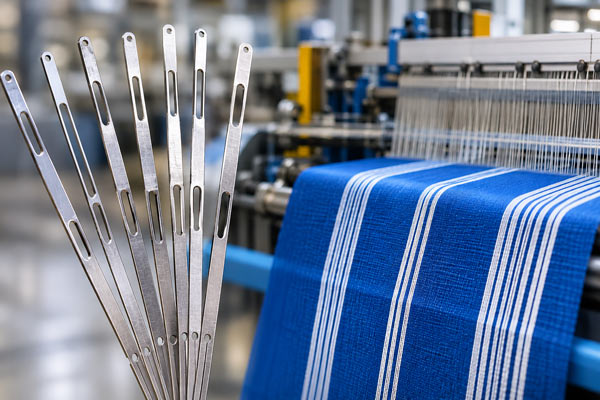
What Is a Narrow Fabric Heald
A narrow fabric heald, also called a tape heald, guides a warp yarn through its eyelet. As the loom or Jacquard harness operates, the heald helps position the yarn to form the opening through which the weft passes.
The heald works in repeated motion and stays in contact with the yarn. Its dimensions, surface finish and eyelet condition therefore matter during selection. A replacement should match the machine requirements and the yarn path.
Check Loom Compatibility Before Choosing Tape Healds
Start with the loom or Jacquard harness model. Two healds may look similar but have different end shapes, eyelet positions or attachment details.
Before contacting a supplier, collect:
- Loom manufacturer and model
- Existing heald type or part number
- Overall length, width and thickness
- Eyelet size, shape and position
- End shape and mounting details
- Yarn type and count
- Required quantity
If the part number is unavailable, provide a clear drawing or an existing sample. Mention whether the sample is worn or damaged, because wear can change the dimensions being measured.
Which Narrow Fabric Heald Dimensions Should You Check
Measure the complete component instead of checking only its length. Small differences in the eyelet or end design can affect fit and yarn alignment.
| Selection Detail | What to Confirm |
|---|---|
| Overall length | Compatibility with the loom or harness arrangement |
| Width | Fit and clearance within the assembly |
| Thickness | Match the specified component and available space |
| Eyelet size | Suitability for the yarn passing through it |
| Eyelet shape | Match with the required yarn path and existing design |
| Eyelet position | Correct alignment within the assembly |
| End design | Compatibility with the attachment arrangement |
A.K. Industries lists narrow fabric heald lengths from 150 to 332 mm, widths from 4 to 8 mm, and thicknesses from 0.2 to 0.8 mm. These are listed ranges; confirm the exact size combination available for your required type before ordering.
Stainless Steel or High Carbon Spring Steel
Stainless steel and high carbon spring steel are materials listed for narrow fabric healds. The right choice depends on the machine specification, working conditions and required finish.
Stainless steel may be considered where corrosion resistance is a priority. High carbon spring steel may be suitable where the specified design requires its mechanical properties. Material selection should also account for any coating or surface treatment.
When replacing an existing heald, share its material specification if available. Ask the supplier to confirm material and finish separately rather than choosing by appearance alone.
Why Eyelet Size and Surface Finish Matter
The eyelet is the contact point between the heald and the warp yarn. A rough edge, burr or damaged surface can increase friction and contribute to yarn damage.
Check the eyelet for:
- Smooth internal edges
- Visible burrs or sharp points
- Wear grooves
- Consistent shape and size
For delicate or unfamiliar yarns, discuss the application with the supplier and consider a trial quantity. A trial can help assess performance under your actual operating conditions.
Match the Narrow Fabric Heald Type
A.K. Industries lists straight, cropping, simplex and duplex narrow fabric healds. The required type depends on the existing loom or harness design.
Do not choose a different type only because its overall dimensions appear close. Compare the full profile, eyelet position and attachment details. If the type is uncertain, send photographs of both ends, the eyelet and the complete component alongside a sample or drawing.
Buying Tape Healds for Textile Units in Gujarat
For a textile unit in Ahmedabad, Surat or elsewhere in Gujarat, supplier selection should include technical communication and repeat order accuracy.
Confirm whether the supplier can review your drawing, identify the required design and maintain the agreed specification for future orders. Also check sample availability, dispatch arrangements and the expected supply timeline.
Keep separate purchase records for different loom models. A record containing the approved drawing, material, finish and sample reference helps your maintenance and purchasing teams reorder the correct part.
Inspect Samples Before Placing a Bulk Order
A sample check is useful when changing suppliers, selecting a new material or ordering a custom design.
Compare the sample with your approved specification. Check the dimensions, straightness, eyelet finish and end profile. Your maintenance team should confirm fit before a controlled machine trial.
During the trial, observe yarn movement, clearance and any unusual rubbing. If yarn breaks continue, inspect other possible causes, including tension, alignment and the condition of nearby yarn contact parts.
Common Narrow Fabric Heald Buying Mistakes
Avoid these errors when preparing an order:
- Ordering from a photograph without measurements
- Assuming all tape healds fit the same machine
- Ignoring eyelet position and end shape
- Measuring a worn sample without noting the damage
- Leaving material or finish unspecified
- Placing a large order before confirming a new design
- Mixing different heald specifications in one purchase description
A detailed order reduces the chance of receiving parts that need further clarification or replacement.
Narrow Fabric Heald Enquiries With A.K. Industries
A.K. Industries offers narrow fabric healds and tape healds from Ahmedabad, Gujarat. Its product page lists stainless steel and high carbon spring steel options, several heald types and provision for non-standard requirements.
For a suitable product recommendation, share your loom model, dimensions, eyelet details, material, finish and quantity. Include a sample or drawing for custom requirements so the design and manufacturing feasibility can be confirmed.
Frequently Asked Questions
Tape heald is another name used for narrow fabric heald. However, the name alone does not confirm compatibility. Check the dimensions, eyelet and end design before buying.
Use the machine specification, an approved drawing or a suitable existing sample. Measure length, width, thickness, eyelet size and eyelet position, then confirm the end profile.
A sample can help identify the required design. A.K. Industries states that non-standard requirements can be considered. Confirm feasibility and note any wear or damage on the sample.
Inspect healds showing bends, cracks, rough eyelets, wear grooves or damaged ends. Your maintenance team should assess whether the condition affects yarn movement or correct operation.
Send the loom or harness model, heald type, complete dimensions, eyelet details, material, finish and quantity. Include a drawing or sample where possible.